
The blue veins of Bree-Eik
Some streams around Bree-Eik once disappeared underground. Today, wherever possible, we try to let the water flow visibly through the landscape again.
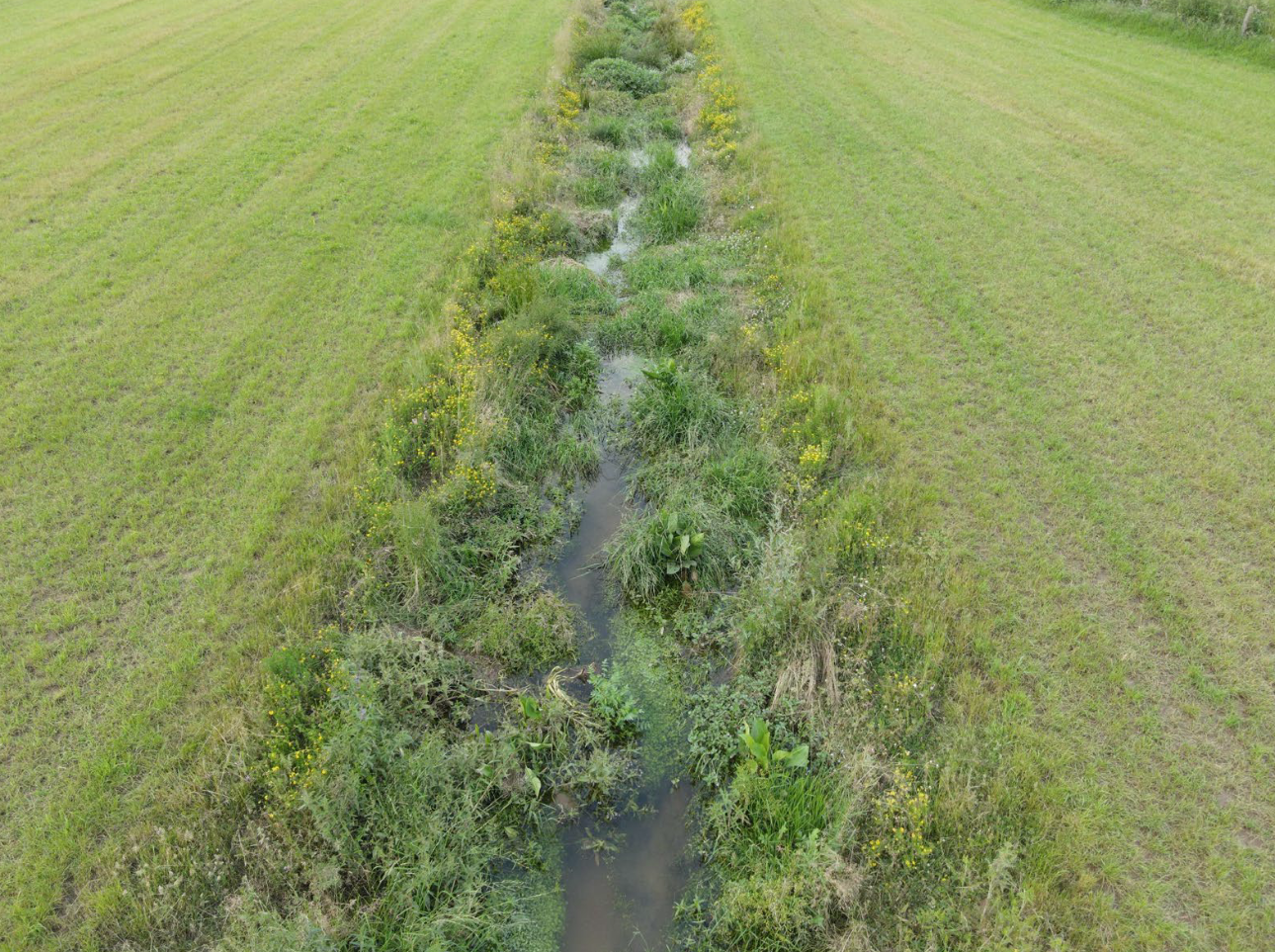
A landscape is not shaped only by what grows above ground.
Water, too, determines where fields, grasslands, woods and plants can develop.
At Bree-Eik, this difference is clearly visible. The higher, drier ground is suited to arable farming. Lower in the landscape, the soil becomes damper and we find grasslands. Closer still to the watercourses, wet zones, marshy woodland, ponds and streams appear.
Water thus forms a natural structure running through the landscape.
But part of that structure disappeared.
When streams became pipes
In the past, several small watercourses were piped underground. By putting a stream underground, the plot above it could be worked more easily and farmland could be drained.
For farming, this produced usable land.
Ecologically, a habitat disappeared at the same time.
A flowing stream, after all, offers different conditions than still water in a pond. Various plants and animals depend precisely on that flowing water and its accompanying banks.
Making the water visible again
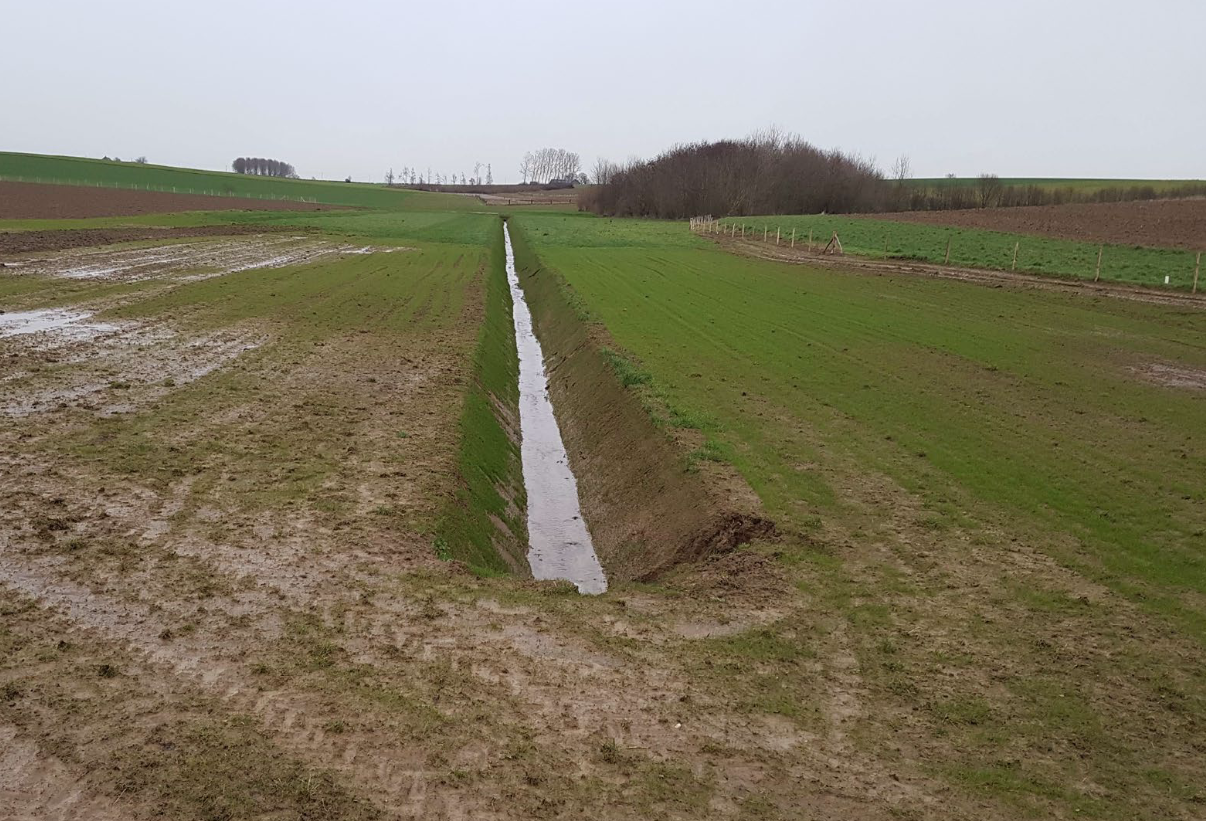
At Bree-Eik, we therefore try to open up old watercourses again wherever possible.
The water is given room once again to flow above ground through the landscape. Wider banks are provided along the stream, where vegetation can develop.
The biodiversity report aptly calls these watercourses the blue veins of the landscape. After about three years, high plant diversity was already visible along restored sections.
Connecting instead of separating
Just as a hedge can connect different pieces of landscape, so too can a stream.
It runs alongside grasslands, fields and woods, creating different conditions along the way.
That is why, at Bree-Eik, we do not see water only as something that needs to be drained away.
It belongs to the landscape.
And where we can, we give it room once again to help shape that landscape.
Read more
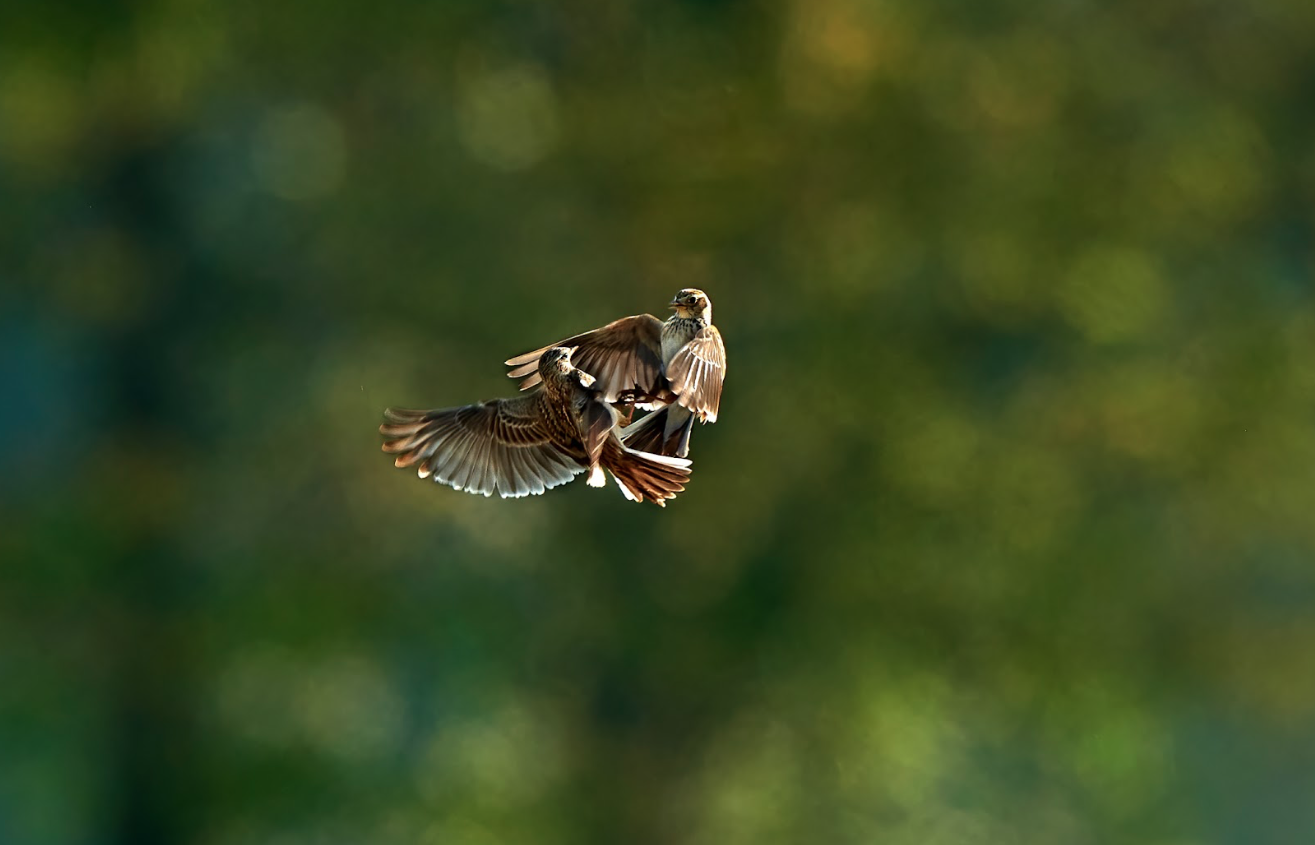
More time for the skylark
The skylark still breeds in the fields of Bree-Eik. To give it room to do so, we even adjust our mowing schedule on some plots.
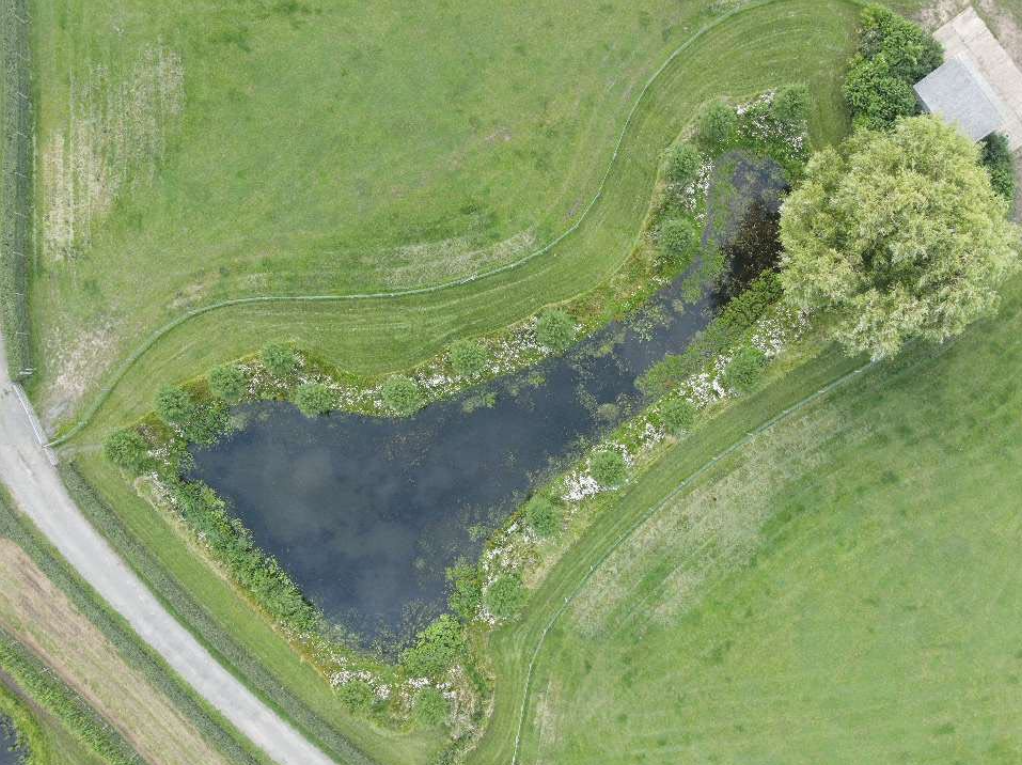
Biodiversity at Bree-Eik
Organic farming is our foundation. But farmland is also a habitat. That's why, at Bree-Eik, we deliberately make room for plants, insects, birds and other animals.
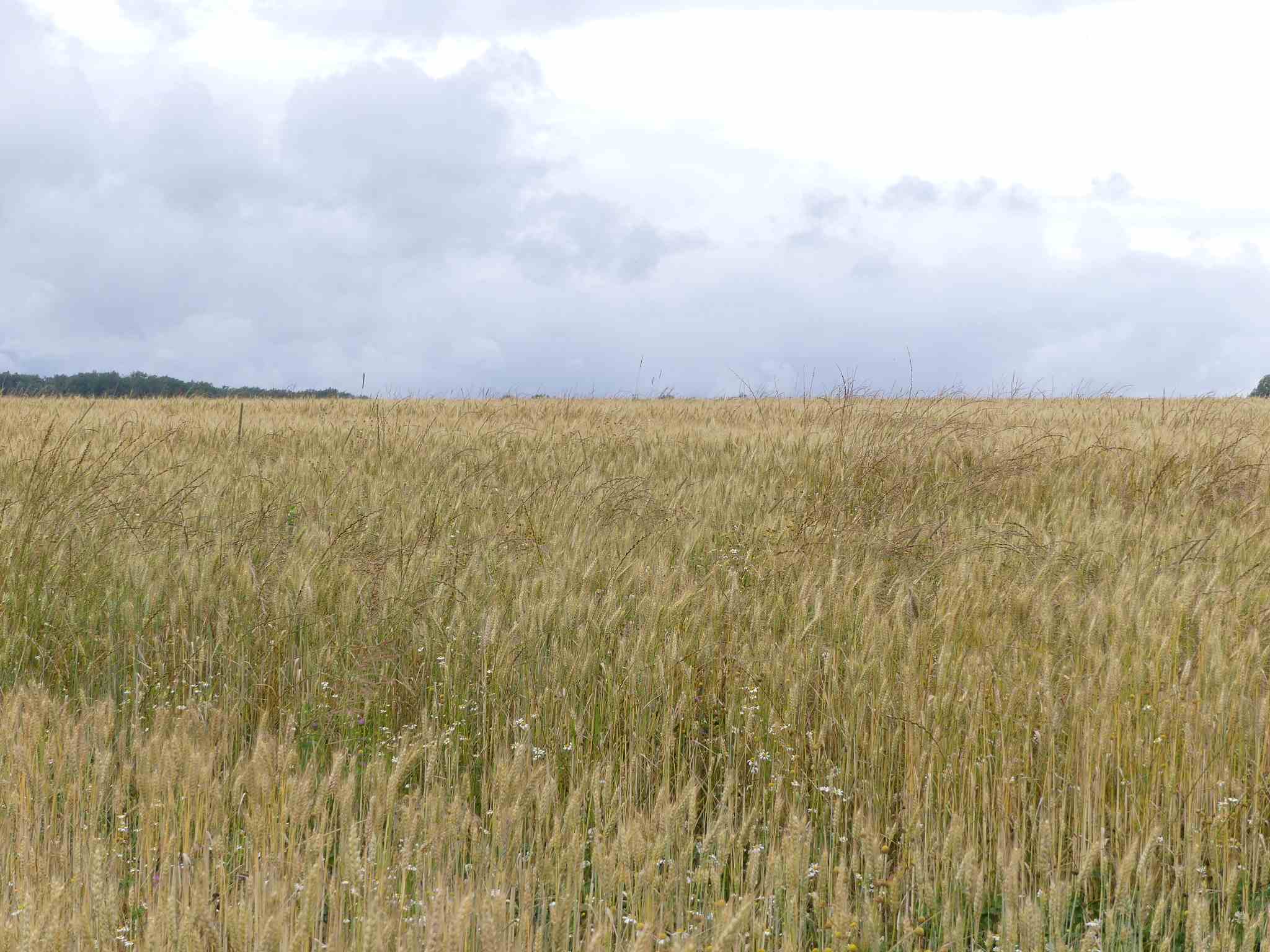
A field that yields more than a harvest
On one of our grain fields, maximum yield is not the priority. Here, old arable plants are given the chance to find a place again.