
Biodiversity at Bree-Eik
Organic farming is our foundation. But farmland is also a habitat. That's why, at Bree-Eik, we deliberately make room for plants, insects, birds and other animals.
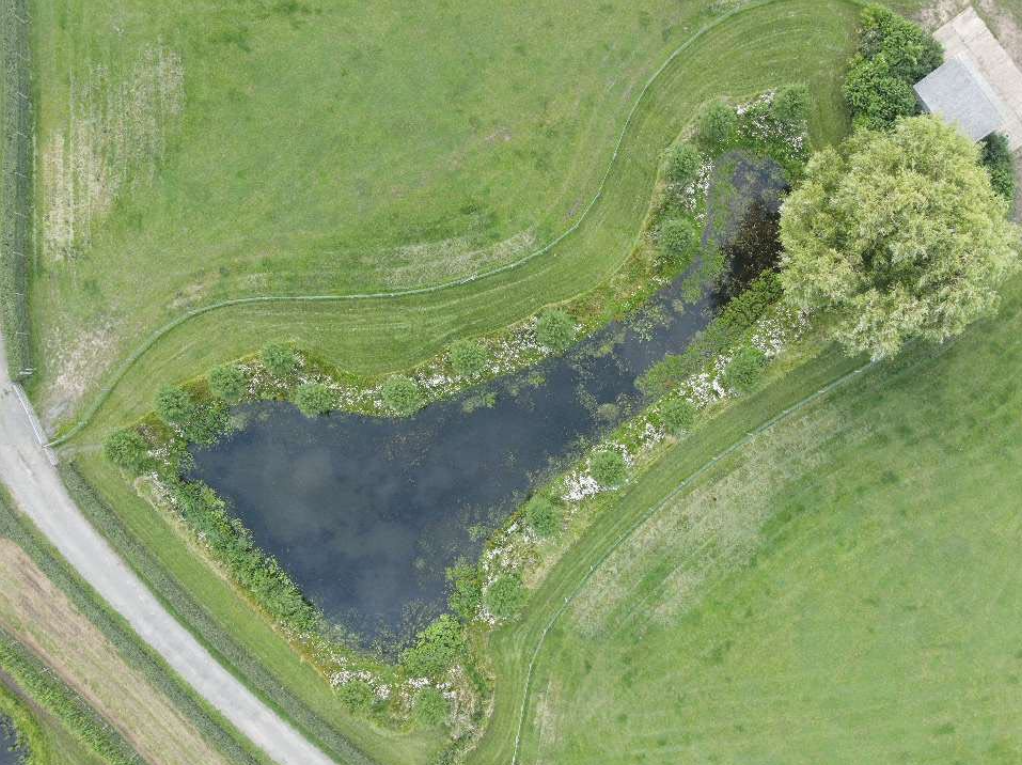
Anyone looking at Bree-Eik sees, first and foremost, a farm. Fields where we grow crops, meadows for our animals, and buildings where work gets done. But between and around that farmland lies another landscape.
Hedges and tree lines connect plots to one another. Flower-rich meadows offer food and shelter to insects. Farmland birds nest among the crops. Lower in the landscape lie woods, ponds and streams. Even the farm buildings offer nesting and roosting sites for birds and bats.
For us, these aren't separate patches of nature next to the farm. They're part of the same farmed landscape.
Organic is our starting point
At Bree-Eik we deliberately choose organic farming. But farming organically doesn't automatically mean there's enough room for biodiversity.
An organic field, too, can be farmed intensively. Meadows can be mown often, and farmland can be used so efficiently that little room is left for wild plants and animals.
That's why, at Bree-Eik, we want to go a step further.
Alongside organic farming, we also choose nature-inclusive farming. That means we deliberately create places within the farm where nature gets more room, and we adapt the way we work when that can make an ecological difference. Sometimes that means managing less intensively. Sometimes it even means that a patch of land can't produce at maximum.
That's not nature alongside farming. It's nature within the farmed landscape.
Looking at the whole landscape
Planting a hedge is relatively simple. But not every hedge has the same value.
A short, narrow hedge that connects to nothing offers different opportunities than a wide tree line that runs for hundreds of metres through the landscape, connecting meadows, fields and woods.
That's why, at Bree-Eik, we try not to look only at individual measures. We view the landscape as one whole.
Where are the existing hedges? Where can new connections be created? Which meadows can become richer in flowers? Where can farmland birds breed? How does the water flow through the area? And how can fields, meadows, tree lines, woods and buildings reinforce one another?
Our biodiversity vision describes this as a puzzle in which different species must be able to find a place again.
Hedges, meadows and fields
Part of that work is immediately visible.
Hedges and tree lines that were once a natural part of the Pajottenland farming landscape disappeared in many places due to scaling-up and the use of barbed wire. With them went shelter, nesting sites and food for many species. At Bree-Eik, we're rebuilding that network.
Our meadows, too, can play an important role. By managing certain plots less intensively, mowing later, or temporarily leaving parts standing, flowers and herbs get more of a chance. That, in turn, creates more room for insects and the animals that depend on them.
And even a field doesn't have to produce only a harvest. On one of our grain fields, old arable flora is deliberately given room again. Among the grain grow, among other things, cornflowers, poppies and rarer arable plants. The flower-rich field attracts insects and is used every year as breeding ground by, among others, skylark, lapwing and yellow wagtail.
Sometimes nature asks something in return
Making room for biodiversity sounds simple, but on a farm it sometimes means we have to make real choices.
The skylark is a good example of that.
This farmland bird still breeds at Bree-Eik, among other places in plots of grass, clover and lucerne. A full breeding cycle takes about 45 days. Those plots used to be mown on average every 37 days. For a nest built between two mowing rounds, that was often too short.
That's why, in places where skylarks breed, we now aim for about 48 days between two mowing rounds.
For the birds, that means more time. For the farm, it means later-mown grass of lower feed quality, and possibly one fewer mowing round during the season.
That's exactly where nature-inclusive farming becomes concrete.
Not every square metre needs to produce at maximum at every moment.
Water and buildings belong too
Moreover, biodiversity doesn't stop at the edge of a field.
In the past, some streams around Bree-Eik were culverted underground to make farmland drier and easier to work. Where possible, old waterways are being reopened today. This gives flowing water a place in the landscape again, and new habitats can arise along the banks. The biodiversity vision aptly describes these waterways as the blue veins of Bree-Eik.
Our buildings are also part of that story.
Old farm buildings can offer nesting and roosting sites for sparrows, swallows, owls and bats. During renovations, we try to take that into account. For example, nest boxes are integrated where possible, and the attic of the gatehouse has been set up as a roost for bats.
A landscape that keeps changing
The work on biodiversity at Bree-Eik is never finished.
A newly planted hedge needs years to grow. A flower-rich meadow changes gradually. New species appear, others stay away. Some measures work as hoped, others need adjusting.
That's why we don't see biodiversity as a project that's completed at some point.
It's a way of looking at the place where we farm.
At our fields and what they can produce, but also at what lives among them. At the soil beneath our feet, the birds above the field, the hedges along our plots and the water flowing through the landscape.
Because at Bree-Eik, we don't just want to produce organic food. We want to do so within a farmed landscape where nature, too, gets room.
Read more
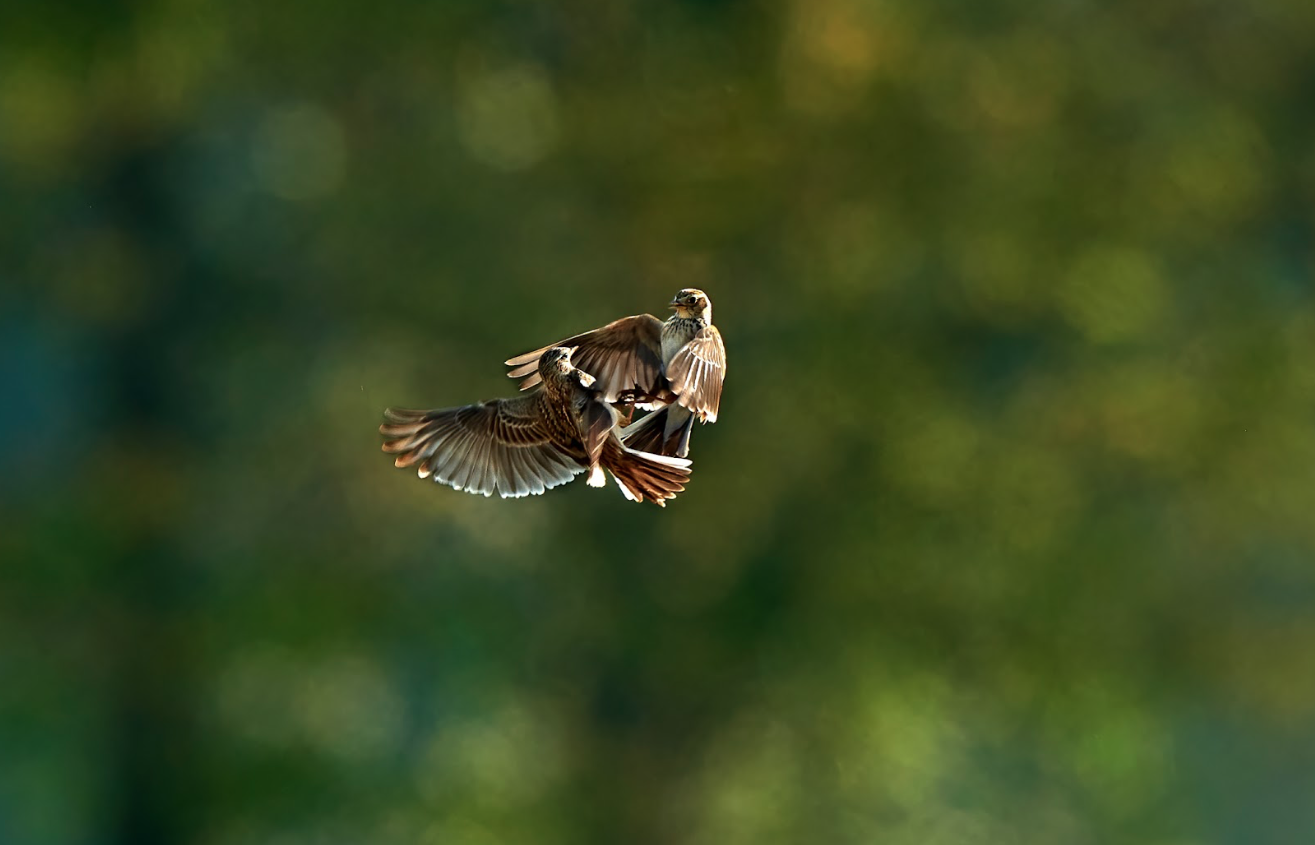
More time for the skylark
The skylark still breeds in the fields of Bree-Eik. To give it room to do so, we even adjust our mowing schedule on some plots.
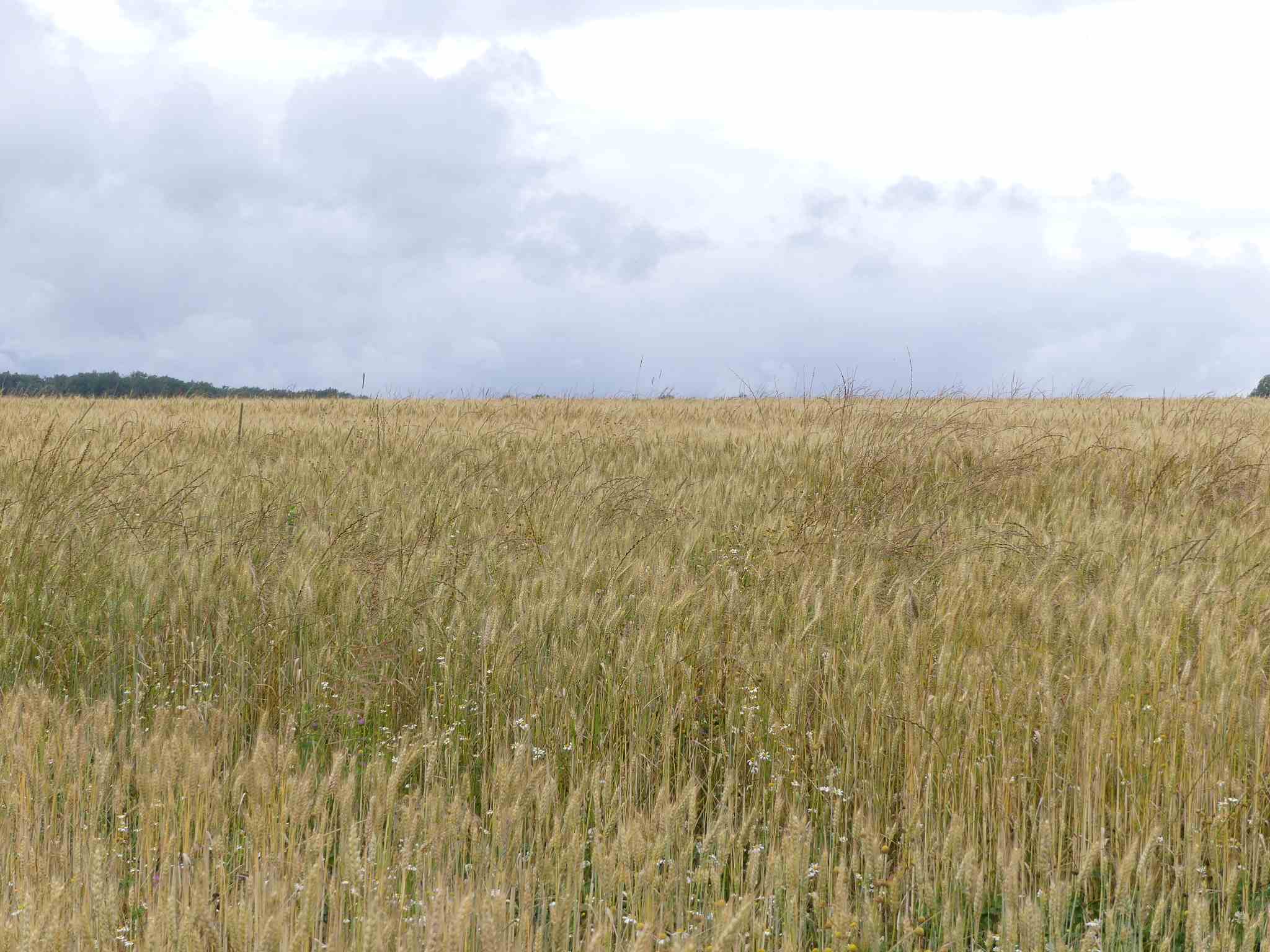
A field that yields more than a harvest
On one of our grain fields, maximum yield is not the priority. Here, old arable plants are given the chance to find a place again.
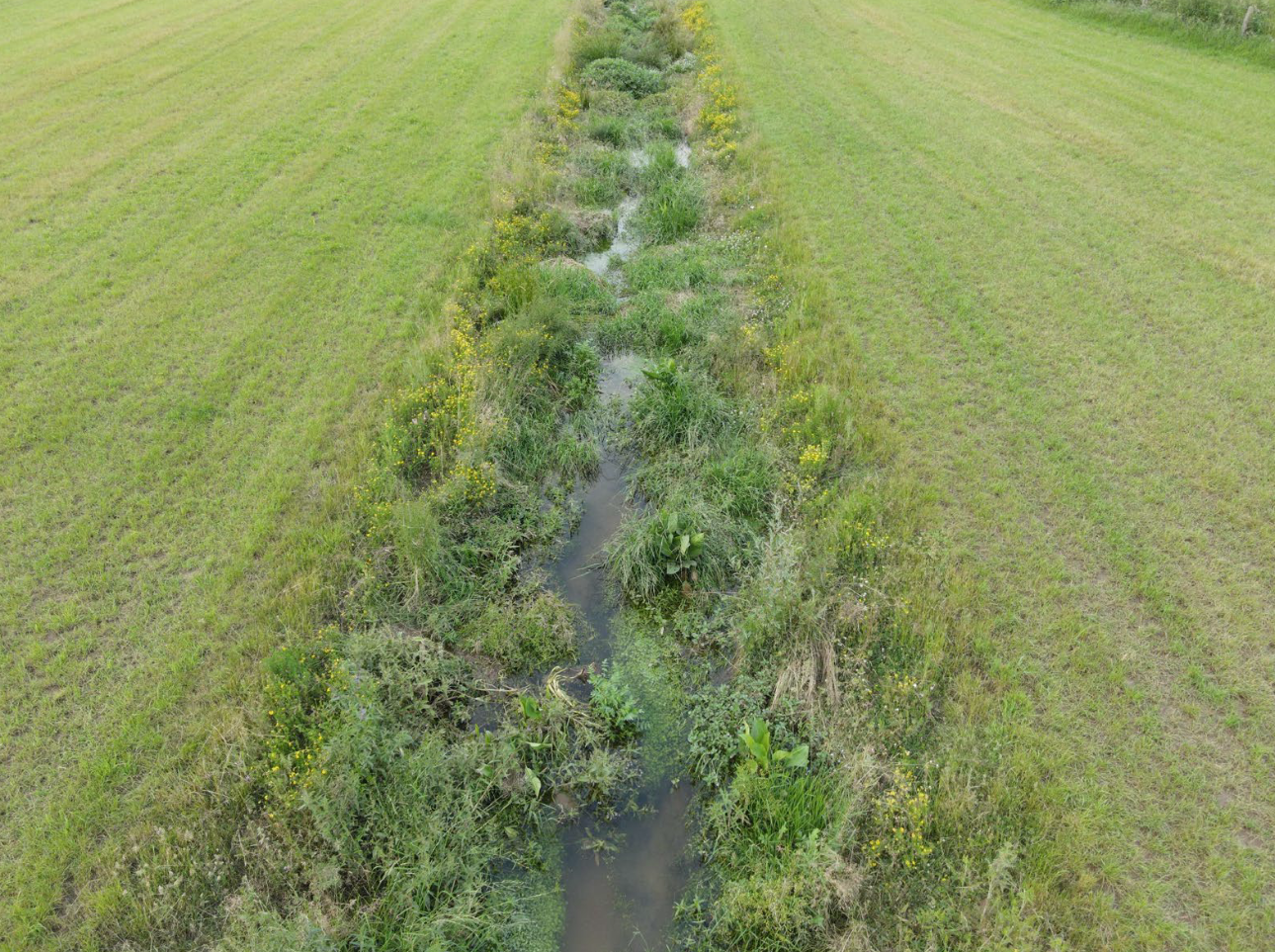
The blue veins of Bree-Eik
Some streams around Bree-Eik once disappeared underground. Today, wherever possible, we try to let the water flow visibly through the landscape again.